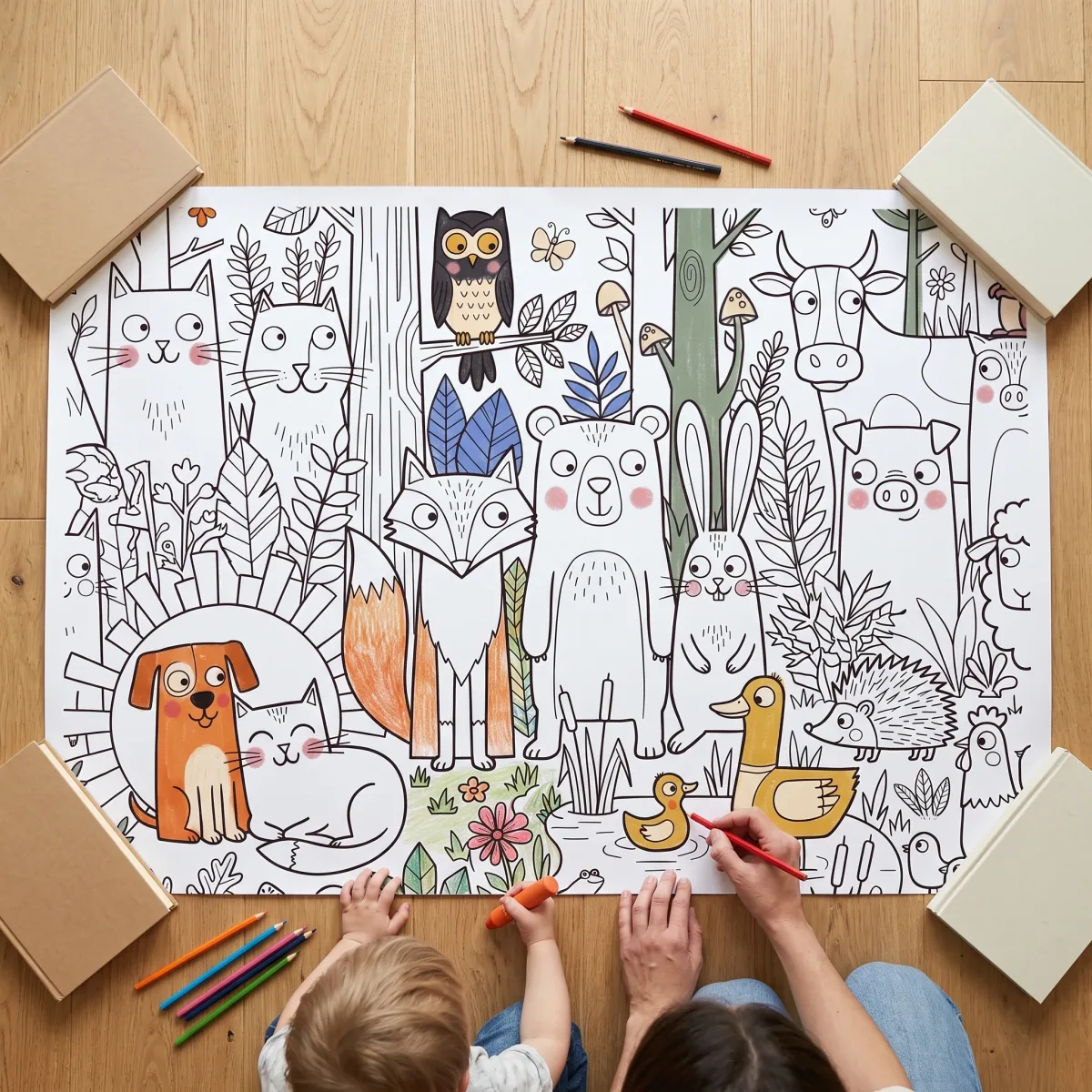
Ages 3–5
Colouring for a 3-year-old: what works
Practical tips for the first colouring years: what to put on the table, how long to sit, and what to do when the crayon goes everywhere but inside the lines.
By the Telning team · Last updated
What can you expect from a 3-year-old?
Every child is different, and we are not experts in child development, so take this as everyday experience, not a rule. Many 3-year-olds scribble across the picture, press hard, change colour often and leave a page after a few minutes. All of that is colouring.
A child of this age may care more about the colour they pick than about the shape they fill. Staying inside the lines is something you can leave for later, or never.
Which crayons and pencils are easiest to start with?
Choose things that are easy to hold and hard to lose:
- Short, thick wax crayons or chunky pencils.
- A small set: five or six colours are easier to choose from than sixty.
- Felt-tips only when you are sitting close by. Keep caps and small parts away from a child of three, and stay with them while they colour.
Tape the corners of the paper to the table or the floor with a bit of masking tape, so the sheet does not slide.
What kind of picture works best?
Big, simple shapes with thick lines are easier to start with than small, busy pictures. Our Story Walls for ages 3–7 are drawn that way: every shape is 20% bigger than on the 7+ version of the same picture, and about 15% is already painted in as a guide, so your child sees where colour goes.
A big picture also means there is always a new shape to try. Your child can colour a rabbit this morning and a duck tomorrow, and the picture is still there.
How long should a colouring session be?
Short. Five or ten minutes is a good session for many three-year-olds, and fifteen is a long one. Stop when your child stops. If they walk away, leave the paper and the crayons where they are, and they may come back by themselves.
A picture that stays on the floor over a weekend suits this well. Nobody has to finish it.
What if my child only wants to scribble?
Then let them scribble. A scribble is a real way to colour, and a three-year-old is often happy with it. Watch what they choose: the colour, the pressure, the place on the paper. You may see a rabbit turn orange with a green ear, and it is just as good as a tidy one.
If you want to nudge, do it with the picture, not with words. Point at a big shape and say, “That is the duck’s hat. Shall we make it blue?” If your child says no, say “Okay” and let them carry on.
What can you say while your child colours?
Try not to judge the result. Ask small, open questions instead: “Which animal shall we colour next?” “What colour is its hat?” “Where is it going?” You can also colour a small shape yourself next to your child and say what you are doing.
How should you set up the space?
A low table or a clear patch of floor works best, with the paper at a height where your child can reach every part. Put an old shirt or an apron on your child, cover the floor if you want to, and keep drinks away from the picture.
Sit beside your child, not opposite. Then you can see the same side of the picture, and you are close if a crayon rolls away or breaks. Keep a small tray of crayons within reach, and put the rest of the box out of sight until you need it.
From our shop
Paws & Claws Story Wall
A crowd of funny animals from the woods, the farm and the house: a puppy and a cat side by side, a fox, a bear, rabbits, owls on a branch, a cow, a pig, sheep, a hedgehog, a duck family on the pond and a hen with her chicks, among ferns and mushrooms€28.90Ages 3–7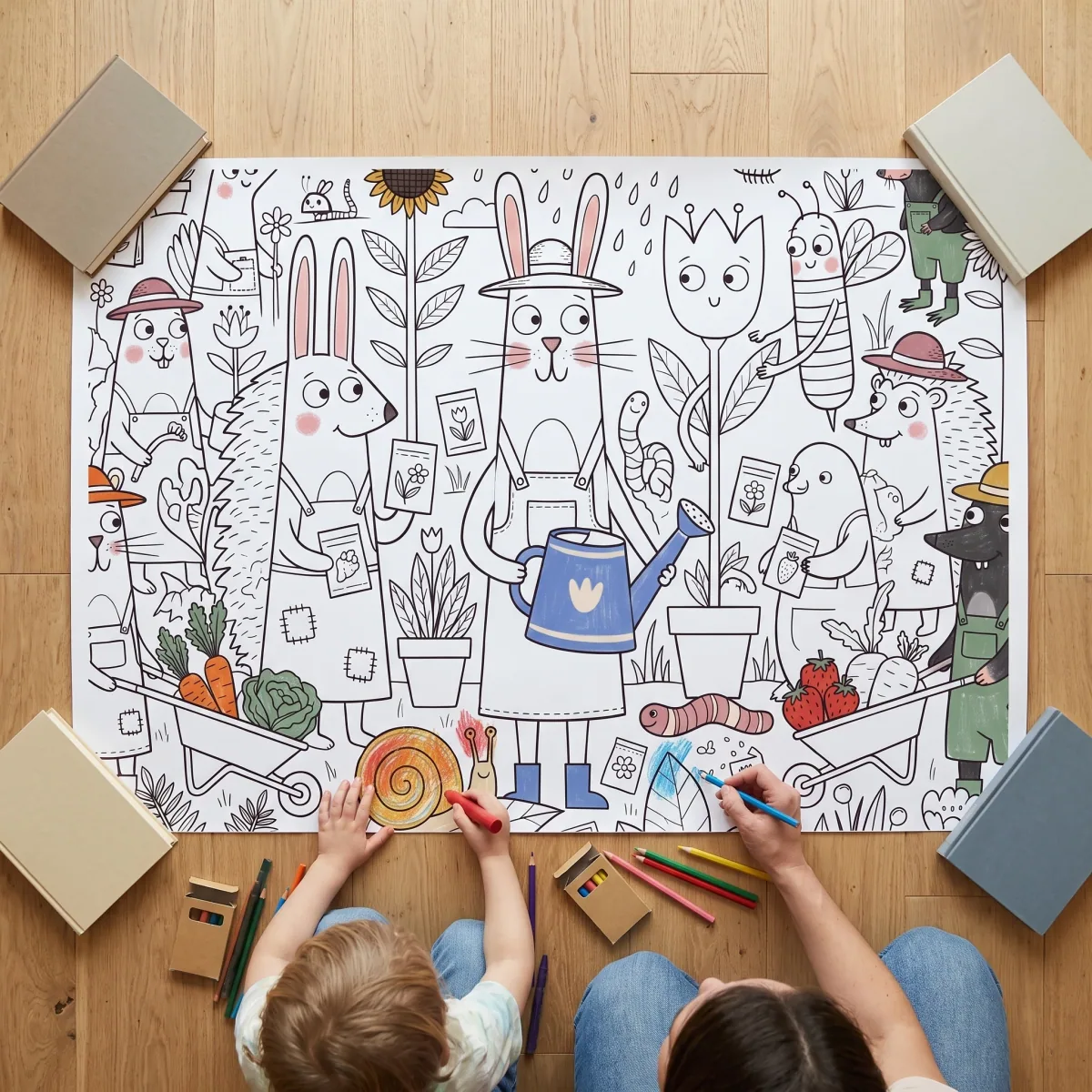
Little Gardeners Story Wall
A busy garden: a red tulip with a face and a bee, a rabbit with a watering can, a hedgehog in a sun hat, a worm, a snail, sunflowers, seed packets and a wheelbarrow full of strawberries€28.90Ages 3–7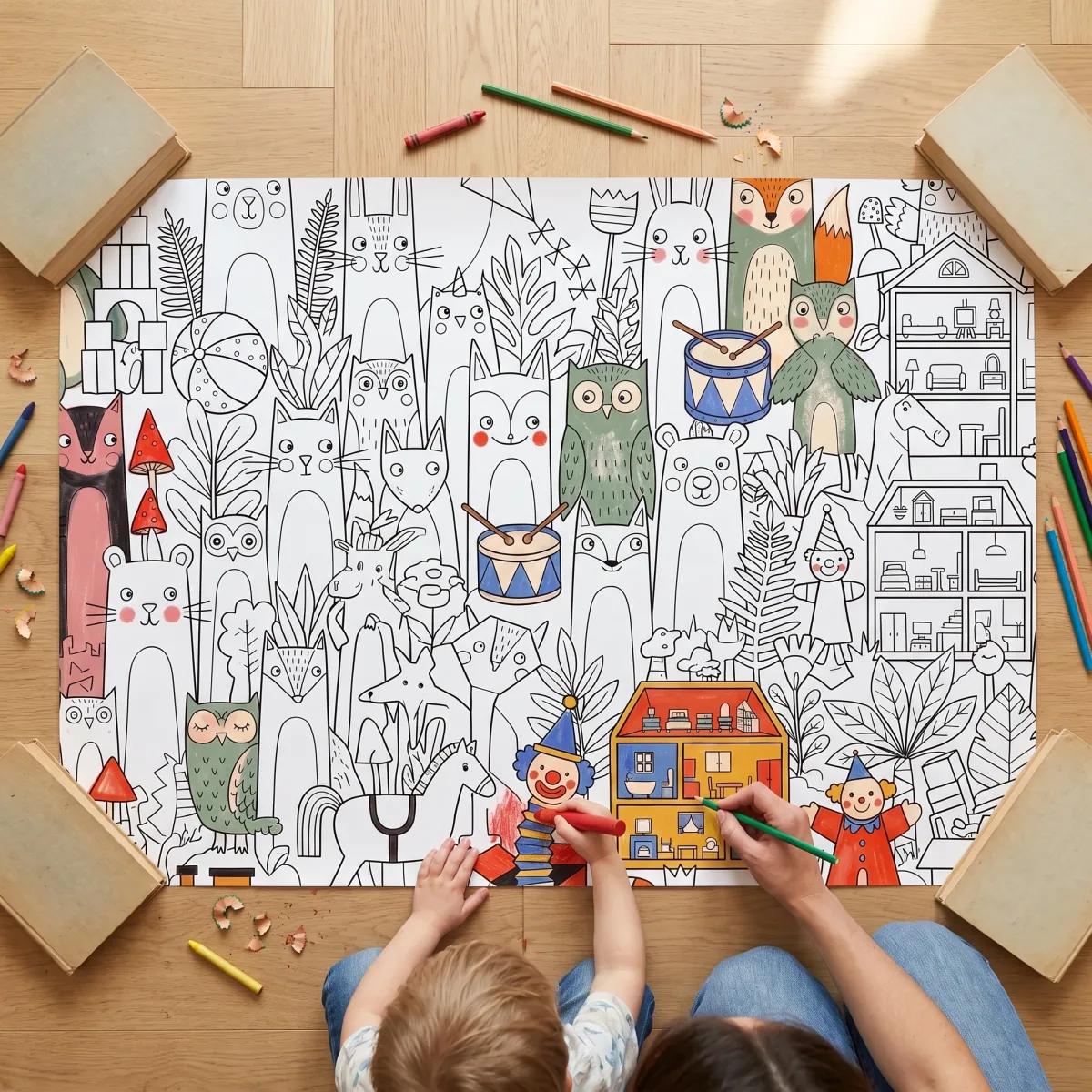
The Toy Box Story Wall
A toy room come to life: teddy bears, a tall block tower, a ball, a kite, a drum, dolls’ houses, a rocking horse, a toy train and toy cars, packed edge to edge€28.90Ages 3–7
Quick questions
At what age can a child start colouring?
There is no single age. Many children start to make marks with a thick crayon long before three. Offer it, sit beside your child and see what they do.
Is a Story Wall too big for a 3-year-old?
The big size is the point: a 100 × 70 cm picture on the floor gives a small child a lot of room. For ages 3–7 the shapes are bigger and the lines thick. Always stay nearby, and keep the tube and packaging away from small children.
Should I correct colouring outside the lines?
There is no need. At three, most children are still finding out what a crayon does. Talk about the colours and the story of the picture instead.
What if my child loses interest after two minutes?
That is normal for many children. Stop, leave the picture out, and try again later. A large picture does not have to be finished in one go.
A picture for the weekend
Choose a world your child already likes, such as animals, toys or the garden. It comes rolled in a tube and stays on the floor as long as you like.
More guides
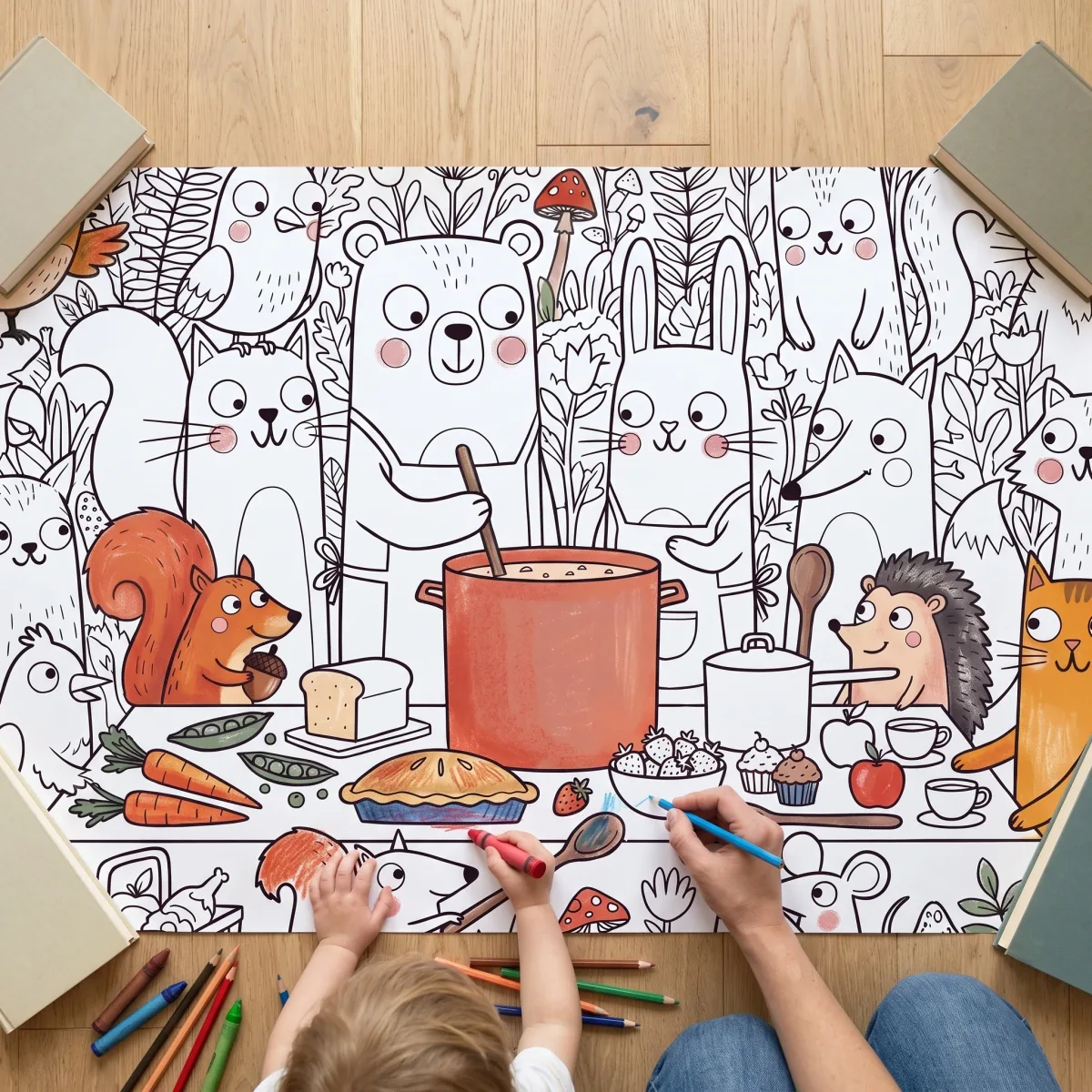
Big colouring pages for kids who find small pages hard
Bigger shapes, thicker lines and more room: simple changes for children who give up on small pages.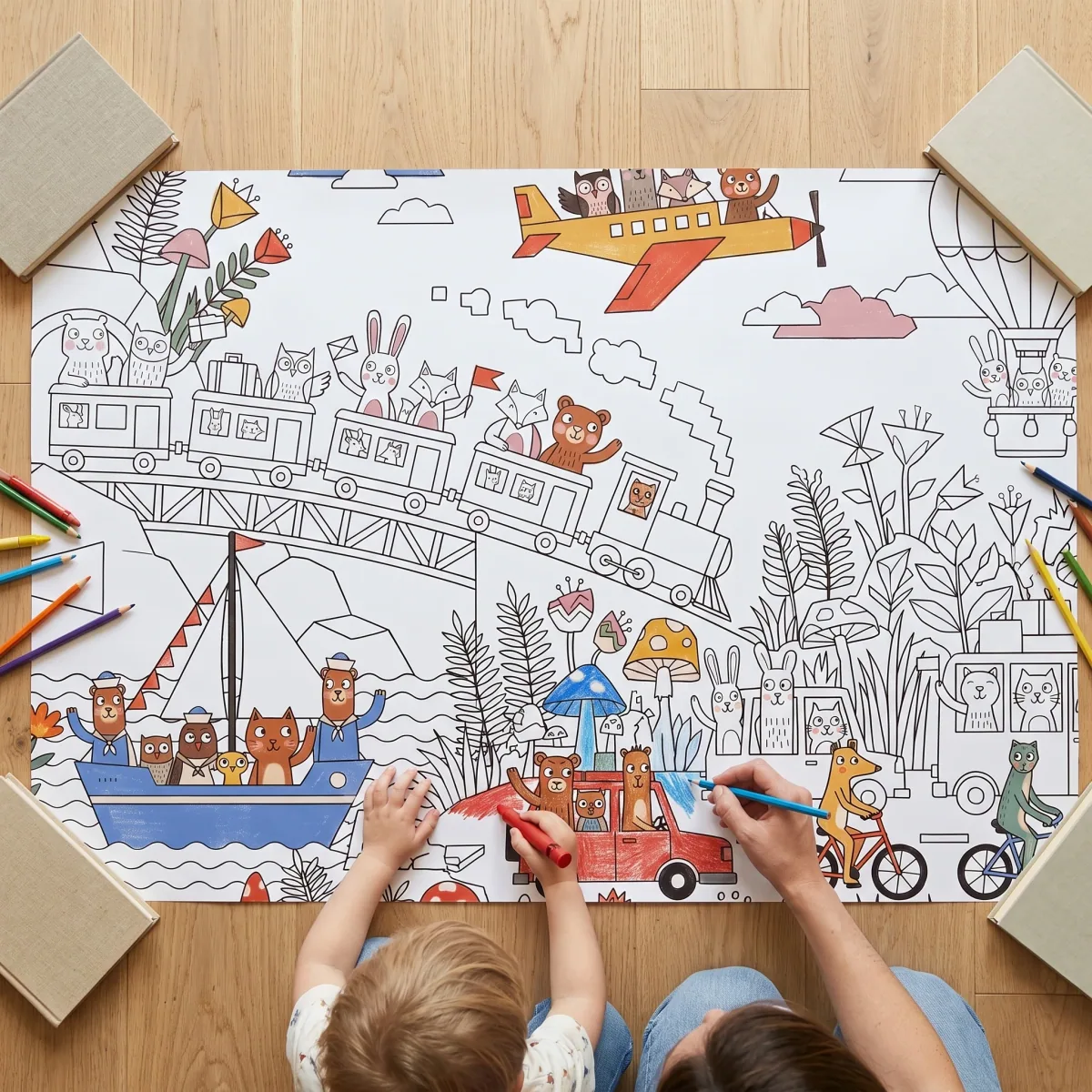
Rainy-day and travel colouring ideas for families
Eight low-effort colouring games for a wet Saturday, a holiday house and a long journey.