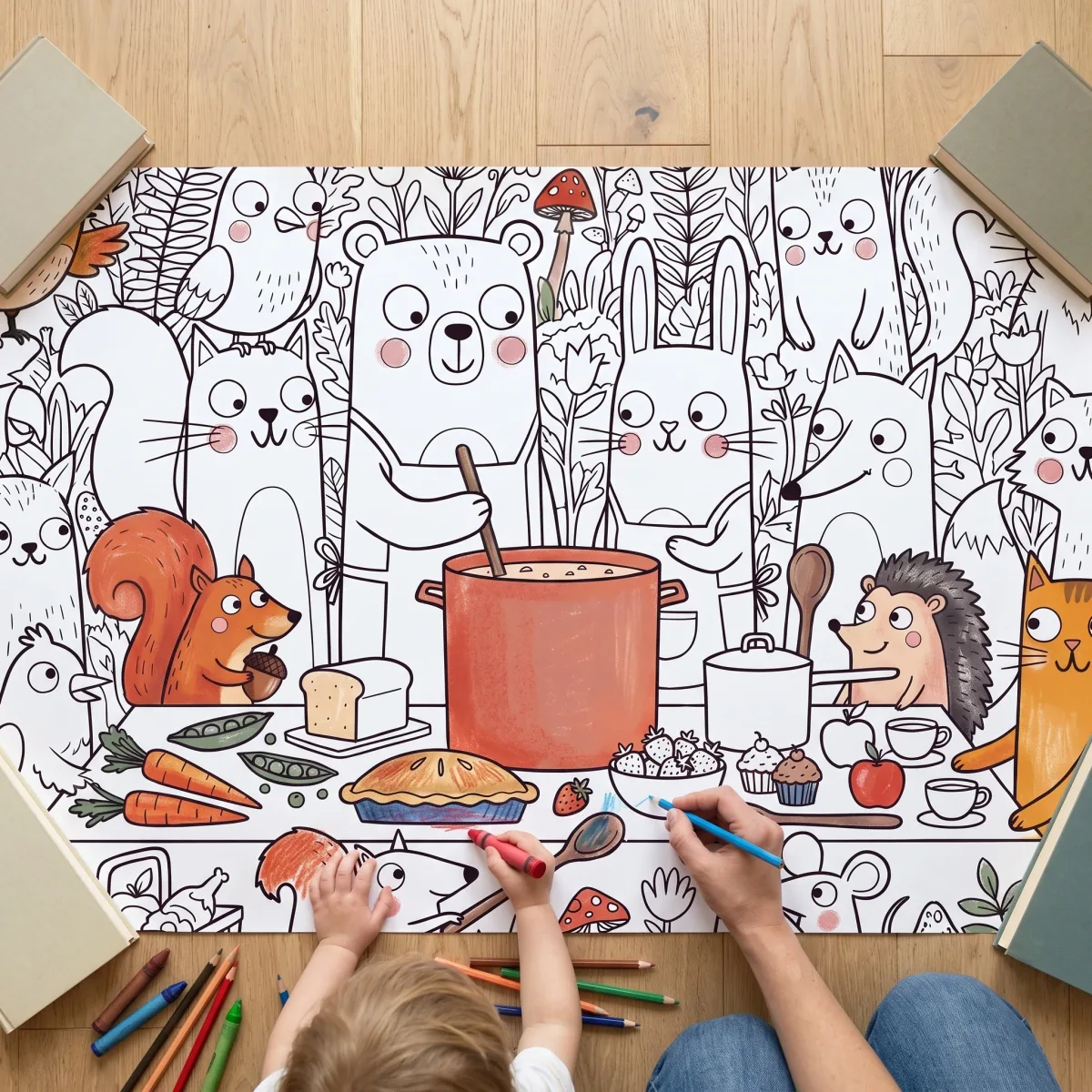
Practical tips
Big colouring pages for kids who find small pages hard
Some children get frustrated with small shapes and thin lines. Here are practical ways to make colouring easier to start, and why a bigger page can help it feel less fiddly.
By the Telning team · Last updated
Why do some children give up on small pages?
There are many reasons, and we cannot know which one fits your child. It might be tiredness, or that the shapes feel too tight for a crayon, or that the picture looks like too much work.
If you are worried about how your child uses their hands or pencils, talk to your doctor, your nursery or your school. This page is only about everyday colouring at home. It makes no promises about skills or development.
What makes a colouring page easier to start?
Look for pictures that give the crayon some space:
- Big shapes, so a few strokes fill one.
- Thick, clear lines that are easy to see.
- Few tiny details, at least in the beginning.
- A page you can lay flat and reach from every side.
On Telning Story Walls for ages 3–7, every shape is 20% bigger than on the 7+ wall of the same picture, and the lines are thick. The 7+ wall has smaller shapes and more details for later.
How can you make the start easier?
Try these small changes, one at a time:
- Start in a corner. A 100 × 70 cm picture is big, but nobody has to colour all of it. Pick one animal or one object.
- Use a chunky crayon or a thick pencil instead of a thin pen.
- Tape the paper to the floor so it does not slide away.
- Colour one shape yourself first, with your child watching.
- Take turns: your child colours a big shape, you colour a small one.
How can a grown-up help without taking over?
Offer a choice, not a correction: “Shall we colour the big red hat or the small blue one?” Colour a shape in the same area, with your own pencil, and keep your hand away from your child’s part of the picture. If you want to show how to fill a shape, do it on a spare shape and let your child watch.
Say what you notice, in plain words: “You used a lot of green here.” A child who hears that a grown-up sees their work often wants to show more.
Does it help to colour on the floor?
Many children like to lie on the floor, kneel or even stand and colour with their whole arm. A big page on the floor lets them move around the picture instead of sitting still at a table.
Put a sheet of card under the paper if you use felt-tips. Our Story Walls are printed on thick matte paper, 189 g/m², and the picture is already partly painted (about 15%), so your child can see how a finished shape looks.
What if the colouring goes outside the lines?
Leave it. A picture with colour over the lines is still your child’s picture. Praise the colours they chose, not how neat it is. If a child is upset about a mistake, a different colour on top is always possible, and the picture hangs on the wall just the same.
How do you know a picture is too hard right now?
Watch for signs such as putting the pencil down after a few seconds, saying “it is too small”, or tearing the paper. None of this tells you anything about your child. It only tells you that this picture, today, is not a good match.
Try a bigger shape, a thicker pencil or a different picture. Or colour only one shape and stop. A child who has finished one big shape has finished something, and that is a good way to end.
From our shop
Little Kitchen Story Wall
Cooking day: a bear stirring a big soup pot, bread, a pie, strawberries, cupcakes, apples and teacups, with squirrels, cats, a hedgehog and a mouse with cheese€28.90Ages 3–7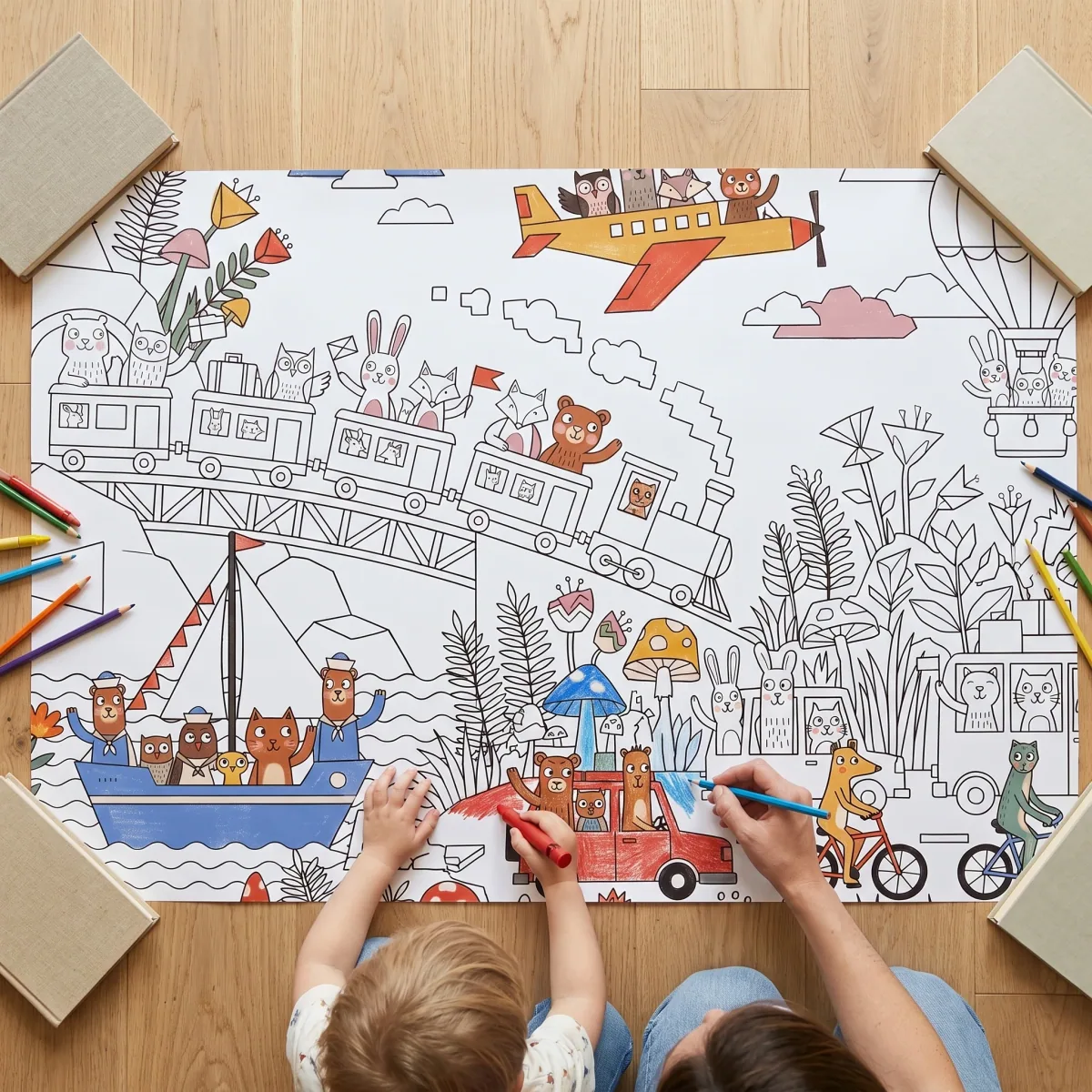
On the Move Story Wall
Going places: a train over a bridge, a hot-air balloon, a plane, a sailing boat, a lighthouse, cars and bikes, with animal travellers waving from every window€28.90Ages 3–7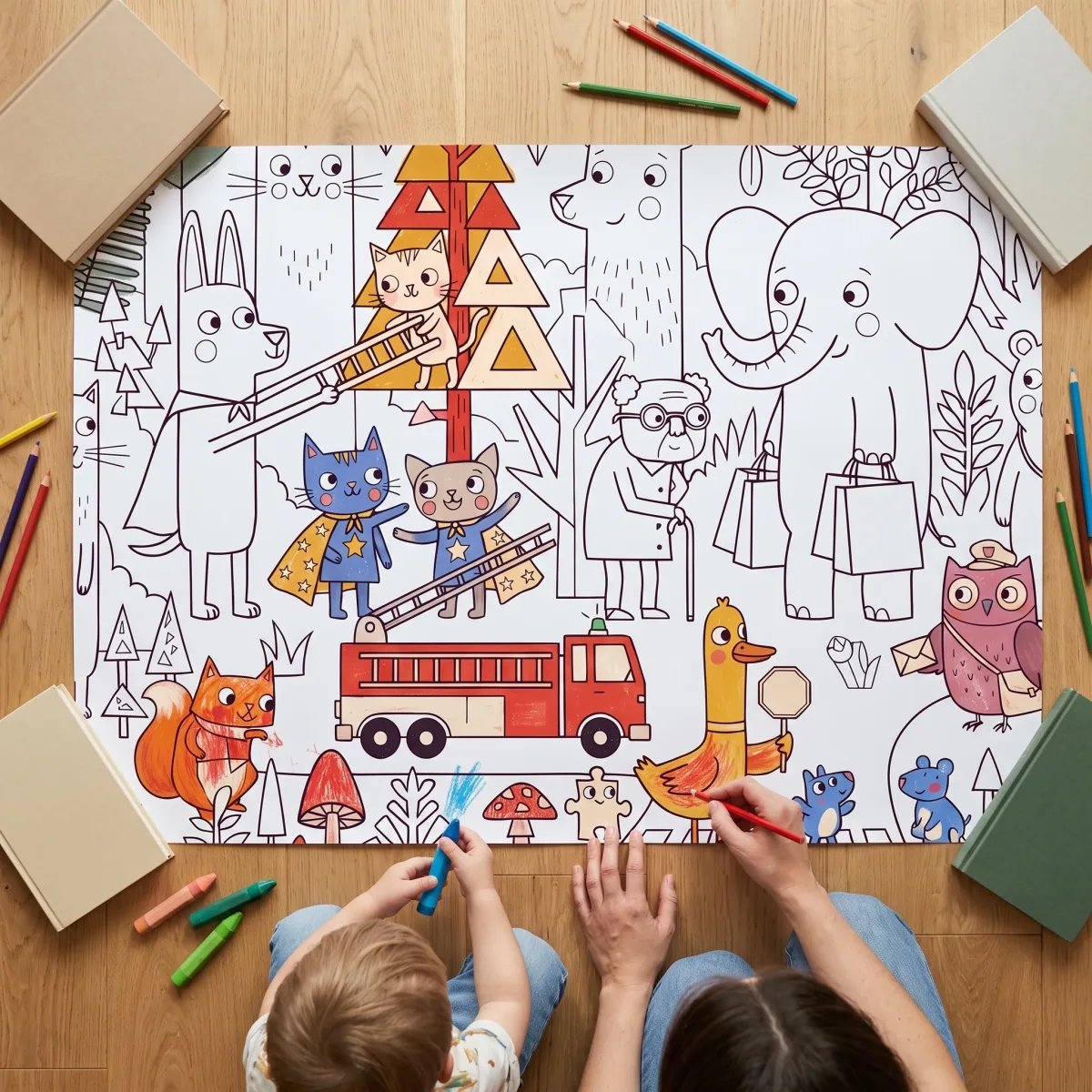
Everyday Heroes Story Wall
Helping hands everywhere: a fire engine with a ladder, an elephant carrying the shopping, a doctor bear, a duck crossing guard at the zebra crossing, a little puzzle friend and animals in capes€28.90Ages 3–7
Quick questions
Do big colouring pages work for older children too?
Yes. Many older children enjoy a big picture because there is room to work and a result they can hang up. For ages 7+ we make the same picture with smaller shapes and more details.
What size is a Telning Story Wall?
100 × 70 cm, landscape. It is a poster, so it is bigger than any page in a book.
Is this advice medical?
No. These are everyday tips from a small publisher. If you have questions about your child’s development or how they use their hands, ask a doctor, a nursery or a school.
Which pens are easiest to start with?
Short, thick crayons or chunky pencils. Use card under the paper with felt-tips.
Find a picture with big shapes
Every series has a 3–7 Story Wall with big shapes and thick lines. Look at the pictures and choose a world your child already likes.
More guides
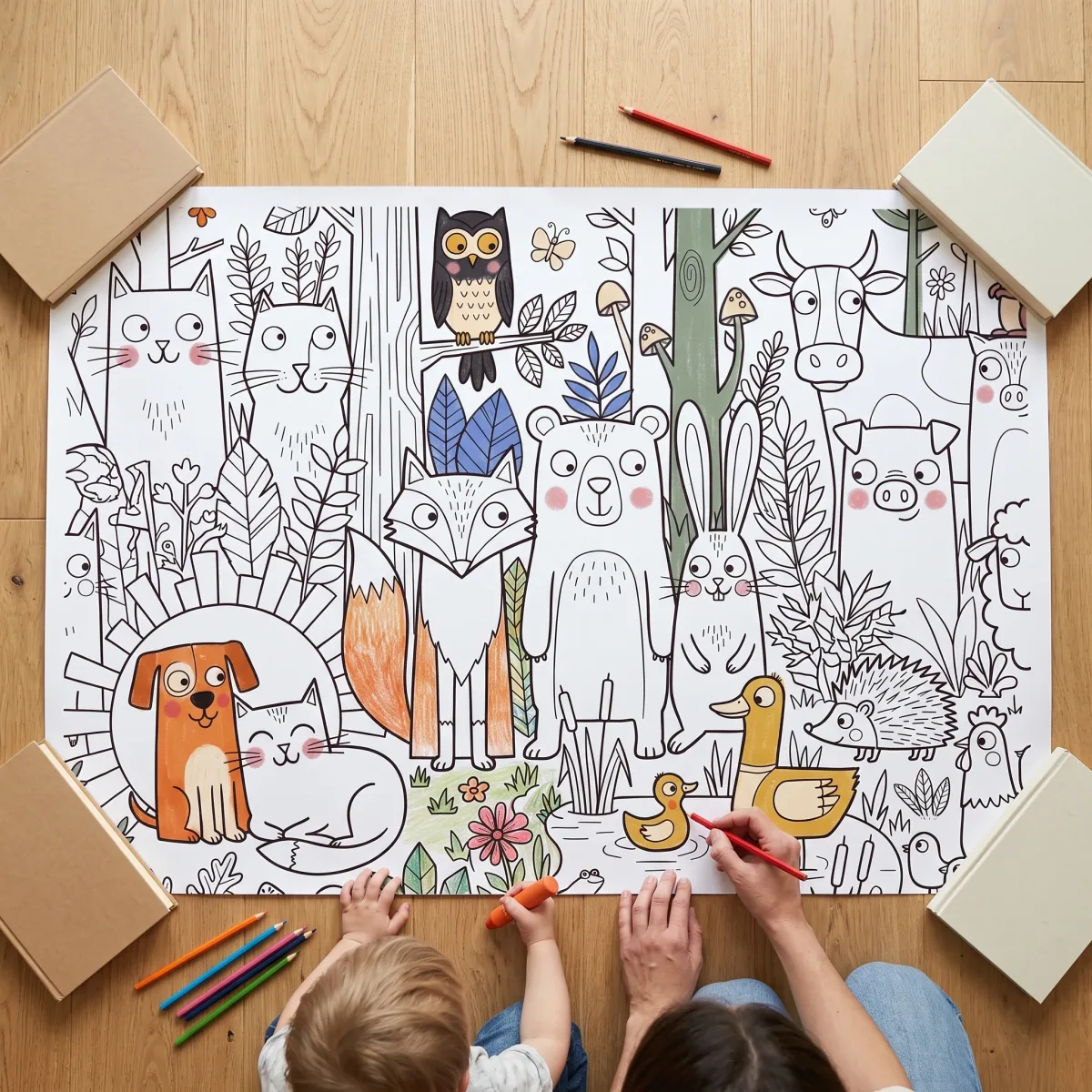
Colouring for a 3-year-old: what works
Chunky crayons, short sessions and big shapes: simple things that make a 3-year-old want to come back.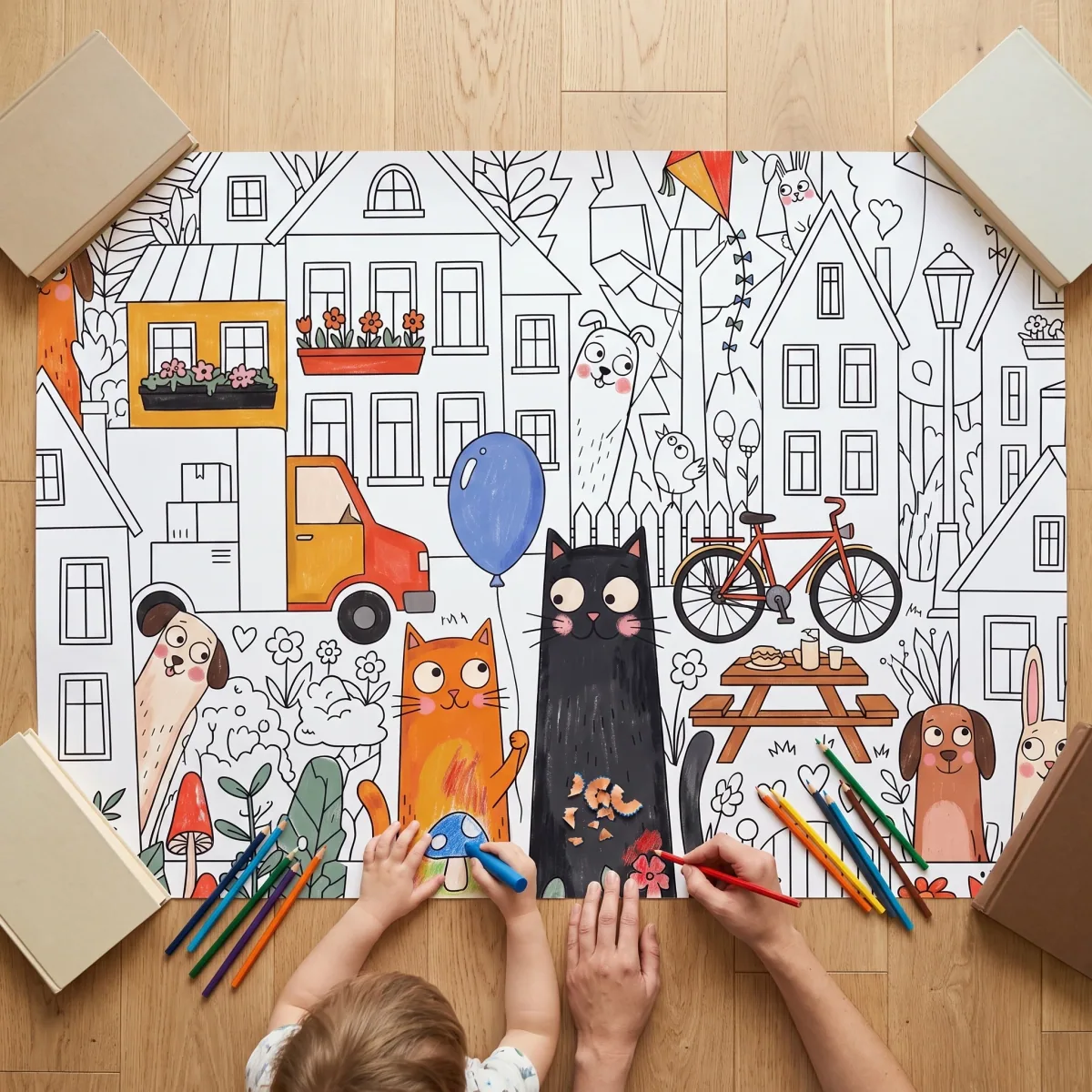
Colouring book or giant colouring poster? How to choose
When a book is the better buy, when a giant poster is, and what to check before you order.